
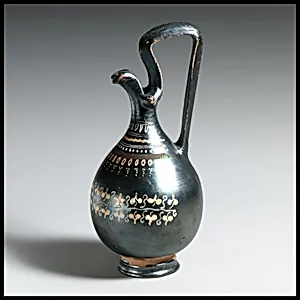
Terracotta oinochoe (jug)
ca. 350–330 BCE
Medium
Terracotta
Dimensions
H. 7 5/8 in. (19.3 cm)
Classification
Vases
Culture & Period
Greek, South Italian, Apulian, Canosan · Late Classical
Department
Greek and Roman Art
Museum
Metropolitan Museum of Art, New York, NY
Credit
Rogers Fund, 1971
Accession Number
1971.11.19
Rights
Public Domain
Art Historical Context
This elegant terracotta oinochoe, or wine jug, hails from the Knudsen Group, a workshop active in ancient Apulia (modern-day Puglia, Italy) around 350–330 BCE during the Late Classical period. Crafted in South Italian Greek colonies known as Magna Graecia, it exemplifies Canosan pottery—a regional style prized for its vibrant red-figure painting and innovative forms. Standing just 7 5/8 inches tall, this compact vessel was likely used in symposia, the lively Greek drinking parties where wine flowed freely, blending daily utility with artistic flair. Terracotta, fired clay painted with glossy black slip and mineral colors, allowed potters to create dynamic scenes of mythology, theater, or daily life on these vases. The oinochoe's trefoil spout and graceful handle reflect functional design refined over centuries, while Apulian workshops like the Knudsen Group's pushed boundaries with elaborate volutes and added relief elements. These pieces often served as grave goods, offering insights into funerary rituals and cultural exchanges between Greeks and local Italic peoples. Acquired by The Metropolitan Museum of Art through the Rogers Fund in 1971, this jug invites us to sip from the past—envisioning torchlit banquets amid the heel of Italy's boot, where art and revelry intertwined.