
Terracotta pyxis (box)
Unknown Artist
ca. 400 BCE
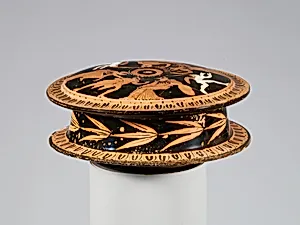
Medium
Terracotta
Dimensions
Other: 2 3/4 x 4 5/8 in. (7 x 11.7 cm)
Classification
Vases
Culture & Period
Greek, Attic · Classical
Department
Greek and Roman Art
Museum
Metropolitan Museum of Art, New York, NY
Credit
Rogers Fund, 1906
Accession Number
06.1021.122a, b
Rights
Public Domain
Tags
Art Historical Context
This delicate terracotta pyxis, lidded box, hails from Attic Greece around 400 BCE, during the Classical period—a golden age of Athenian art and culture marked by ideals of harmony, proportion, and human beauty. Measuring just 2¾ x 4⅝ inches, this petite vessel was likely used by women to store cosmetics, jewelry, or perfumes, offering a glimpse into everyday life in ancient Athens. Crafted in terracotta, a fired clay favored for its durability and versatility, it exemplifies the exquisite pottery tradition of the region, where potters and painters collaborated to create functional yet ornate objects. Adorned with scenes featuring women and Eros, the god of love, the pyxis reflects themes central to Greek mythology and social rituals. Such decorations, painted in the refined red-figure technique typical of late Classical vases, allowed the natural clay color to shine through figures while details were incised or painted in black slip. These intimate motifs celebrated femininity, desire, and beauty, underscoring women's roles in domestic and cosmetic spheres. Acquired through the Rogers Fund in 1906 and now housed in the Metropolitan Museum of Art's Greek and Roman Art department, this pyxis captures the artistry of anonymous Attic workshops. It invites us to ponder the personal luxuries of ancient women, bridging millennia with its timeless elegance.