
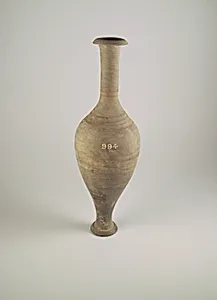
Terracotta spindle-shaped unguentarium (perfume bottle)
Unknown Artist
ca. 3rd–2nd century BCE
Medium
Terracotta
Dimensions
9 1/16in. (23cm)
Classification
Vases
Culture & Period
Greek · Hellenistic
Department
Greek and Roman Art
Museum
Metropolitan Museum of Art, New York, NY
Credit
The Cesnola Collection, Purchased by subscription, 1874–76
Accession Number
74.51.363
Rights
Public Domain
Art Historical Context
This delicate terracotta unguentarium, or perfume bottle, hails from the Hellenistic period of ancient Greece, around the 3rd to 2nd century BCE Standing just over 9 inches tall, its elegant spindle shape—narrow at both ends and bulging in the middle—was a hallmark of these vessels, designed for storing and dispensing precious oils, perfumes, and cosmetics. Crafted from fired clay, a versatile and abundant medium, it exemplifies the everyday artistry of Greek potters who wheel-threw or molded such forms for practical beauty. In the Hellenistic era, following Alexander the Great's conquests, Greek culture flourished with increased trade and luxury goods, making scented unguents a status symbol for grooming and religious rituals. These bottles were ubiquitous in tombs and households, reflecting a society that valued personal adornment and hygiene. The simple, undecorated surface highlights functional design over ornate decoration, prioritizing portability and ease of use. Part of the Metropolitan Museum of Art's renowned Cesnola Collection, acquired in the 1870s, this unguentarium offers a tangible glimpse into intimate aspects of ancient Greek life. Though anonymous in its creation, it embodies the period's innovative craftsmanship, bridging utility and subtle aesthetic appeal.