
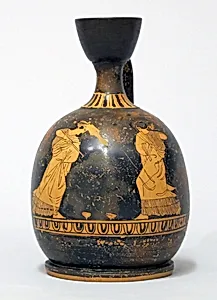
Terracotta squat lekythos (oil flask)
Unknown Artist
ca. 450–430 BCE
Medium
Terracotta
Dimensions
Diameter: 4 3/16 × 1 3/4 × 3 7/16 in. (10.6 × 4.5 × 8.7 cm) Height: 6 5/8 in. (16.8 cm)
Classification
Vases
Culture & Period
Greek, Attic · Classical
Department
Greek and Roman Art
Museum
Metropolitan Museum of Art, New York, NY
Credit
Gift of Samuel G. Ward, 1875
Accession Number
75.2.9
Rights
Public Domain
Tags
Art Historical Context
This delicate terracotta squat lekyth, an ancient Greek oil flask from Attica around 450–430 BCE, exemplifies the refined craftsmanship of the Classical period. just 6⅝ inches tall, its compact, bulbous form with a narrow neck was designed for storing perfumed oils or ointments, often used in daily rituals or as grave offerings. Produced in Athenian workshops, these vases were wheel-thrown from fine clay and fired to a warm reddish hue, showcasing the technical mastery of Greek potters who balanced functionality with subtle elegance. In the vibrant world of Classical Athens, Attic vases like this one served both practical and symbolic roles, frequently appearing in funerary contexts to honor the dead. The tag "Women" hints at imagery—likely a poignant scene of female figures in mourning or domestic life—reflecting the era's interest in human emotion and gender roles. Such lekythoi bridged the mortal and divine, carrying scents into the afterlife and preserving glimpses of ancient Greek society. Today, this gift to the Metropolitan Museum of Art from 1875 invites us to ponder the intimate details of everyday ancient life, where even a small flask held profound cultural weight.