
Terracotta squat lekythos (oil flask)
ca. 440 BCE
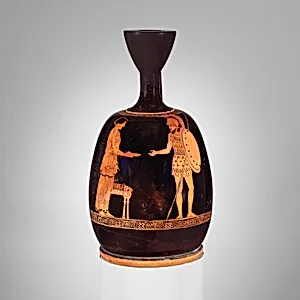
Medium
Terracotta
Dimensions
H. 9 5/8 in. (24.5 cm) diameter 5 5/16 in. (13.5 cm)
Classification
Vases
Culture & Period
Greek, Attic · Classical
Department
Greek and Roman Art
Museum
Metropolitan Museum of Art, New York, NY
Credit
Rogers Fund, 1917
Accession Number
17.230.13
Rights
Public Domain
Tags
Art Historical Context
Step into the world of Classical Athens with this exquisite terracotta squat lekythos, by the Achilles Painter around 440 BCE. Named after legendary hero Achilles for his masterful depictions of him, this Attic Greek vase painter was a leading figure in the red-figure, where figures are painted in the natural red clay against a black-gloss background, allowing intricate details to shine through. Standing just 9 5/8 inches tall with a 5 5/16-inch diameter, this compact oil flask—known as a lekythos—was typically used for perfumed oils in daily life or as grave offerings, blending utility with artistry. The vase's decoration, featuring women warriors brandishing shields, evokes the mythical Amazons, fierce female fighters from Greek lore who battled heroes like Achilles and Heracles. This scene captures the Classical period's fascination with heroism, gender roles, and epic tales, rendered with the Achilles Painter's signature elegance: flowing drapery, dynamic poses, and expressive faces that convey both strength and grace. Such imagery not only entertained but also reflected Athenian ideals of valor amid the Peloponnesian War's tensions. Housed in the Metropolitan Museum of Art's Greek and Roman Art Department (acquired via the Rogers Fund in 1917), this lekythos exemplifies the pinnacle of Attic vase-painting, preserving a snapshot of ancient storytelling for modern eyes.
About the Artist
Achilles Painter
**The Achilles Painter** was a leading Athenian vase painter of the Classical period, active approximately from 470 to 425 BC. His conventional name derives from his name vase, a red-figure amphora (Vatican 16571) now in the Vatican Museums that depicts the hero Achilles in a pensive, armored pose, dated around 450–445 BC. As an Attic artist working in the red-figure technique, he produced works t...