
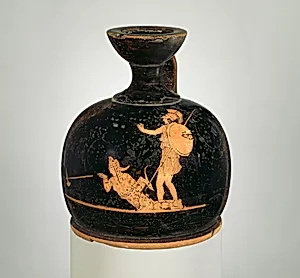
Terracotta squat lekythos (oil flask)
ca. 440–430 BCE
Medium
Terracotta
Dimensions
H. 3 7/8 in. (9.8 cm)
Classification
Vases
Culture & Period
Greek, Attic · Classical
Department
Greek and Roman Art
Museum
Metropolitan Museum of Art, New York, NY
Credit
Fletcher Fund, 1939
Accession Number
39.11.11
Rights
Public Domain
Art Historical Context
This charming terracotta squat lekythos, created in Athens around 440–430 BCE, offers a glimpse into the refined artistry of Classical Greece. Standing just under four inches tall, the small oil flask was likely used to hold perfumed oil for personal grooming or ritual offerings. Its compact, rounded form reflects the inventive shapes Athenian potters developed during this period of cultural flourishing, when Athens stood at the height of its political and artistic influence. Attributed to the Painter of Munich 2363, the vessel exemplifies the sophisticated red-figure technique that allowed artists to render figures with greater naturalism and detail than earlier black-figure styles. As a product of Attic workshops, it highlights how individual painters gained recognition for their distinctive approaches to composition and line work, even on modest functional objects. Such lekythoi played meaningful roles in daily life and funerary practices, often accompanying the deceased as symbols of care and remembrance. Today, this delicate example in the Metropolitan Museum of Art’s collection invites us to appreciate the blend of utility, beauty, and cultural significance that defined Greek vase painting.