
Terracotta stirrup jar
Unknown Artist
ca. 1200–1050 BCE
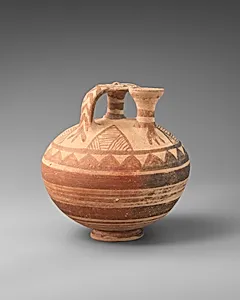
Medium
Terracotta
Dimensions
H. 5 5/8 in. (14.3 cm)
Classification
Vases
Culture & Period
Cypriot · Late Cypriot IIIB
Department
Greek and Roman Art
Museum
Metropolitan Museum of Art, New York, NY
Credit
The Cesnola Collection, Purchased by subscription, 1874–76
Accession Number
74.51.759
Rights
Public Domain
Art Historical Context
This delicate terracotta stirrup jar, dating to ca. 1200–1050 BCE, hails from the Late Cypriot IIIB period the island of Cyprus, a vibrant hub of Eastern Mediterranean trade during the waning Late Bronze Age. Standing just 5 5/8 inches (14.3 cm) tall, its compact form exemplifies the practical ingenuity of ancient Cypriot potters, who crafted it from fired clay for everyday and commercial use. The stirrup jar's distinctive design features a main body with two small, bridge-like handles resembling horse stirrups, flanking a spout for controlled pouring—ideal for transporting precious liquids like olive oil, perfume, or wine without spillage. This shape, popular across Cyprus and Mycenaean Greece, highlights the island's role as a cultural crossroads, blending local traditions with Aegean influences amid the era's upheavals, including the collapse of major Bronze Age palaces. Acquired as part of The Cesnola Collection (purchased by subscription, 1874–76), this vase now graces the Metropolitan Museum of Art's Greek and Roman Art department. It offers a tangible glimpse into Cyprus's seafaring world, where humble pottery fueled far-reaching exchanges.