
Textielfragment
1751 - 1764
Medium
silk
Dimensions
19; 27.8
Rights
Public Domain
About this artwork
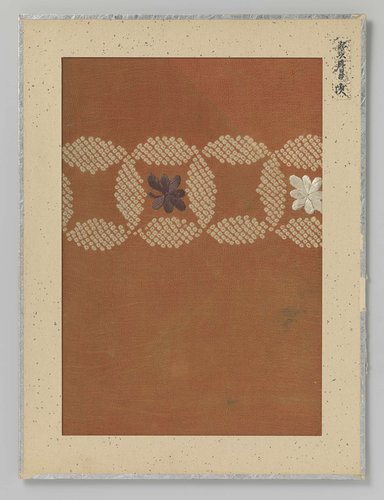
Textielfragment, druk en borduursel op bronsrode crêpe.
Art Historical Context
This exquisite *Textielfragment*, or textile fragment, dates to the mid-18th century (1751–4) and showcases the artistry of an anonymous creator, likely from a Dutch workshop given the title's language. Measuring just 27.8 cm high by 19 cm wide, delicate silk crêpe piece in a rich bronze-red hue exemplifies the luxury textiles prized during Europe's Rococo era, when vibrant fabrics adorned fashionable garments, furnishings, and interiors. The fragment's dual techniques—printing (*druk*) and embroidery (*borduursel*)—highlight sophisticated craftsmanship. Printing allowed for repeatable patterns on silk crêpe, a lightweight, crinkled fabric ideal for flowing drapery, while hand-embroidery added textured depth and personalization. The bronze-red tone, achieved through natural dyes, reflects the period's love for warm, opulent colors symbolizing wealth and status. As a preserved snippet, this artwork offers a window into 18th-century textile innovation, bridging fashion and fine art. Such fragments are rare survivors, revealing how everyday luxury was produced amid growing trade in silk from Asia and emerging European print technologies. Visitors can appreciate its tactile beauty up close, evoking the elegance of a bygone age.
About the Artist
anonymous
In the vast tapestry of art history, "Anonymous" stands not as a singular individual but as a collective designation for countless unidentified creators whose works have endured across millennia. These artists, spanning prehistoric cave painters to medieval illuminators and folk craftsmen, produced the foundational layers of human visual culture. Prior to the Renaissance, when individual fame emer...