
Textile Design: Vertical
Classification
textile designs
Department
Smithsonian Collection
Museum
Smithsonian American Art Museum
Credit
Museum purchase from Friends of the Museum Fund
Accession Number
1957-46-168
Rights
Public Domain
About this artwork
Research in Progress
Art Historical Context
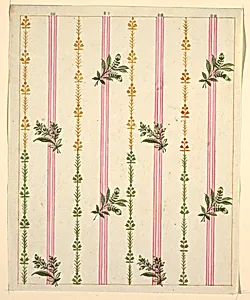
**Textile Design: Vertical** by Louis-Albert DuB (Swiss, 1752–1818) captures the elegance of early 19th-century textile. Created around 1801, this design reflects the meticulous craftsmanship of a Swiss engraver renowned for his intricate patterns. As Europe transitioned from Neoclassicism to the opulent Empire style under Napoleonic influence, such designs were essential for printed fabrics used in fashion, furnishings, and home décor, blending functionality with aesthetic appeal. Though the exact medium remains unidentified amid ongoing research, its classification as a textile design highlights DuBois's role in the burgeoning industry of calico printing and pattern books. Vertical orientations like this one were practical for bolts of cloth or elongated panels, allowing seamless repetition in production. Acquired through the Museum purchase from Friends of the Museum Fund, it now graces the Smithsonian American Art Museum's collection, offering a window into transatlantic design exchanges. This piece invites visitors to ponder the artistry behind everyday luxury. As scholarly research progresses, more details may unveil its techniques and cultural ripples, enriching our understanding of global textile heritage.