
Textile Fragment
Unknown Artist
4th–5th century
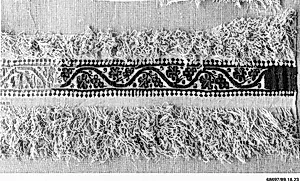
Medium
Wool, linen; plain weave, tapestry weave, weft loop weave
Dimensions
H. 18 1/8 in. (46 cm) W. 7 1/16 in. (18 cm)
Classification
Textiles
Department
Islamic Art
Museum
Metropolitan Museum of Art, New York, NY
Credit
Purchase by subscription, 1889
Accession Number
89.18.23
Rights
Public Domain
Art Historical Context
This exquisite Textile Fragment, dating to the 4–5th century, a glimpse into the sophisticated world of Late Antique textile production in the regions that would later form the Islamic world, such as Egypt or the Near East. Housed in the Metropolitan Museum of Art's Department of Islamic Art, this small yet remarkable piece—measuring just 18⅛ × 7¹⁄₁₆ inches (46 × 18 cm)—was through a subscription purchase in 188, highlighting early collector interest in ancient. Crafted from wool linen using a masterful combination plain weave for structure, tapestry weave for colorful motifs, and weft loop weave for textured loops, the fragment showcases advanced techniques that bridged everyday utility and artistic expression. Tapestry weave allowed weavers to create intricate patterns without cutting threads, while weft loops added a plush, sculptural quality akin to early pile carpets—innovations that influenced later Islamic textiles renowned for their opulence. As a survivor from an era of vibrant cultural exchange along trade routes, this anonymous work underscores the centrality of textiles in ancient societies: worn as clothing, used in furnishings, or traded as luxury goods. Its preservation reveals the enduring legacy of these skilled artisans, whose methods laid groundwork for the rich tapestry traditions of Islamic art.