
Textile Fragment
Unknown Artist
3rd–4th century
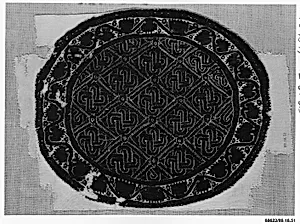
Medium
Wool, linen; plain weave, tapestry weave
Dimensions
H. 13 1/8 in. (33.4 cm) W. 10 5/8 in. (27 cm)
Classification
Textiles
Department
Islamic Art
Museum
Metropolitan Museum of Art, New York, NY
Credit
Purchase by subscription, 1889
Accession Number
89.18.51
Rights
Public Domain
Art Historical Context
This delicate textile fragment, dating to the 3rd–4th century, offers a glimpse into the sophisticated weaving traditions of the Late Antique world. Crafted from wool and linen using plain weave for the ground and tapestry weave for decorative elements, it measures just 13⅛ × 10⅝ inches (33.4 × 27 cm). Acquired by the Metropolitan Museum of Art through subscription purchase in 1889 it resides in the museum's Islamic Art department, highlighting textiles from regions that bridged ancient and early Islamic cultures, such as Egypt or the Near East. Tapestry weave, a labor-intensive technique where colored weft yarns are inserted to create patterns without a continuous warp, allowed artisans to produce vibrant motifs on a sturdy plain-weave base. Wool provided durability and rich dyes, while linen added a crisp texture—ideal for garments, hangings, or mummy wrappings in arid climates. Though the specific design is fragmented, such pieces often featured geometric or figural motifs reflecting daily life, trade, and cultural exchange along ancient Silk Road routes. As a survivor from over 1,600 years ago, this fragment underscores the artistry of anonymous weavers whose techniques influenced Byzantine, Coptic, and later Islamic textiles. It invites us to appreciate the quiet innovation of everyday crafts that preserved stories across millennia.