
Textile Fragment
Unknown Artist
3rd–4th century
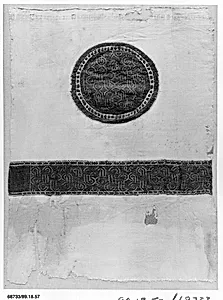
Medium
Wool, linen; plain weave, tapestry weave
Dimensions
H. 24 3/16 in. (61.5 cm) W. 18 1/8 in. (46 cm)
Classification
Textiles
Department
Islamic Art
Museum
Metropolitan Museum of Art, New York, NY
Credit
Purchase by subscription, 1889
Accession Number
89.18.57
Rights
Public Domain
Art Historical Context
This exquisite Textile Fragment, dating to the 3rd–4th century, offers a glimpse into the masterful traditions of late antiquity. Crafted from wool and linen plain weave and tapestry weave techniques, it 24 3/16 inches high by 18 1/8 inches wide. Housed in the Metropolitan Museum of Art's Department of Islamic Art and acquired through subscription purchase in 1889 this fragment survives from a time when textiles were essential for clothing, furnishings, and trade across the ancient Near East and Mediterranean world. The dual weaving methods highlight sophisticated craftsmanship: plain weave provided a sturdy foundation, while tapestry weave—where colored weft yarns create pictorial designs without floating threads—allowed for vibrant, durable motifs. Such techniques, common in regions like Egypt under Roman and Byzantine influence, demonstrate the technical prowess of anonymous artisans whose work bridged pagan and early Christian eras. Though pre-Islamic in date, its placement in the Islamic Art collection underscores the continuity of textile arts into later Islamic cultures, where woven fragments like this preserved patterns and skills vital to daily life and cultural identity. A testament to enduring artistry, it invites us to imagine the hands that wove it centuries ago.