
Textile Fragment
Unknown Artist
4th century
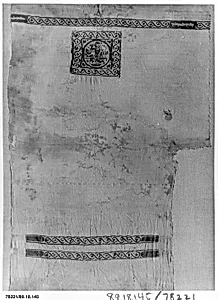
Medium
Wool, linen; plain weave, tapestry weave
Dimensions
Max. H. 26 9/16 in. (67.5 cm) Max. W. 17 1/2 in. (44.5 cm)
Classification
Textiles
Department
Islamic Art
Museum
Metropolitan Museum of Art, New York, NY
Credit
Purchase by subscription, 1889
Accession Number
89.18.145
Rights
Public Domain
Art Historical Context
This exquisite *Textile Fragment* from the 4th century offers a glimpse into the sophisticated textile arts of Late Antiquity. Crafted from wool and linen using plain weave and tapestry weave techniques, it a substantial 26 9/16 inches high by 17 1/2 inches wide. Acquired by the Metropolitan Museum of Art through a subscription purchase in 188, it resides in the museum's Islamic Art department, highlighting the enduring legacy of weaving traditions in regions that later flourished under Islamic culture. The dual weaving methods showcase remarkable technical skill: plain weave provided a sturdy foundation, while tapestry weave allowed for intricate pattern creation by interweaving colored weft threads. These techniques, common in ancient Egypt and the Near East, produced durable yet decorative fabrics ideal for clothing, furnishings, or ceremonial use. Though the artist remains unknown, the fragment's preservation speaks to the high quality of materials and craftsmanship. As a survivor from the 4th century—a pivotal era bridging classical antiquity and early medieval worlds—this piece underscores the cultural exchanges along ancient trade routes. Displayed today, it invites visitors to appreciate how textiles served as canvases for storytelling and status, influencing the vibrant designs of later Islamic art.