
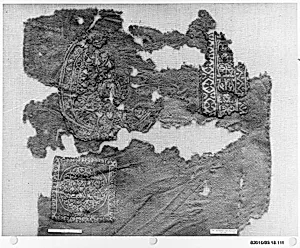
Textile Fragment
Unknown Artist
5th–6th century
Medium
Wool, linen; plain weave, tapestry weave
Dimensions
H. 22 3/4 in. (57.8 cm) W. 14 1/4 in. (36.2 cm)
Classification
Textiles
Department
Islamic Art
Museum
Metropolitan Museum of Art, New York, NY
Credit
Purchase by subscription, 1889
Accession Number
89.18.111
Rights
Public Domain
Art Historical Context
This exquisite *Textile* from the 5th–6th century invites us into the vibrant world of early textiles in the Islamic Art tradition. Housed in the Metropolitan Museum of Art's Art department, this wool and linen piece—measuring 22¾ × 14¼ inches—was acquired through a purchase by subscription in 1889. Dating to Late Antiquity, it survives as a rare glimpse of ancient craftsmanship from the Near East or Egypt, where textiles were essential for clothing, furnishings, and trade. The fragment masterfully combines plain weave for durable, foundational structure with tapestry weave, a technique where colored weft threads create pictorial or patterned designs without supplementary warps. This method, demanding great skill, allowed artisans to produce richly decorated fabrics that reflected cultural motifs, possibly geometric or figural, though the fragment's specifics evoke the period's bold colors and motifs influenced by Byzantine, Sasanian, and early Islamic styles. As a testament to everyday artistry, such textiles underscore the cultural importance of weaving in pre- and early Islamic societies, where they symbolized wealth, status, and technical innovation. Though incomplete, this fragment connects us to the hands that wove it over 1,500 years ago, preserving a thread of history.