
Textile Fragment
Unknown Artist
5th–6th century
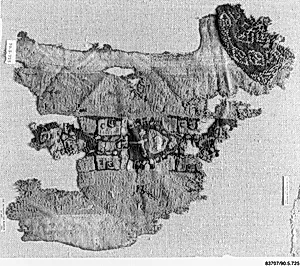
Medium
Wool, linen; plain weave, tapestry weave
Dimensions
Max. H. 9 13/16 in. (25 cm) Max/ W/ 7 1/2 in. (19 cm)
Classification
Textiles
Department
Islamic Art
Museum
Metropolitan Museum of Art, New York, NY
Credit
Gift of George F. Baker, 1890
Accession Number
90.5.725
Rights
Public Domain
Art Historical Context
This delicate textile fragment, dating to the 5th–6th century, offers a glimpse into the sophisticated weaving traditions of the Late Antique world. Crafted from wool and linen using plain weave and tapestry weave techniques, it measures just 9 13/16 inches high by 7 1/2 inches wide. Housed in the Metropolitan Museum of Art's Department of Islamic Art, it generously gifted by George F. Baker in1890, highlighting early collecting interests in ancient fabrics. The plain weave forms a sturdy tabby ground, while the tapestry weave—where colored weft yarns completely cover the warp—allows for vibrant, discontinuous patterns typical of the era. This labor-intensive method, often seen in garments, hangings, or mummy wrappings from regions like Egypt or the Near East, showcases artisans' skill in creating intricate motifs without modern dyes or looms. Though surviving as a modest fragment, it bridges pre-Islamic craftsmanship with later Islamic textile arts, underscoring cultural continuity in pattern-making and material use. Visitors can appreciate how such pieces reveal daily life, trade, and aesthetic values from over 1,500 years ago.