
Textile Fragment
Unknown Artist
5th–7th century
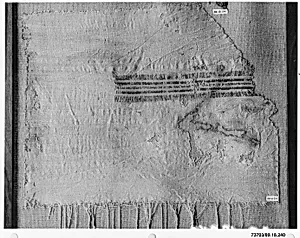
Medium
Wool, linen; plain weave, tapestry weave
Dimensions
Max. H. 17 11/16 in. (45 cm) Max. W. 13 9/16 in. (34.5 cm)
Classification
Textiles
Department
Islamic Art
Museum
Metropolitan Museum of Art, New York, NY
Credit
Purchase by subscription, 1889
Accession Number
89.18.240
Rights
Public Domain
Art Historical Context
This exquisite Textile Fragment, dating to the 5–7th century, a glimpse into the sophisticated textile traditions of the early Islamic world, likely originating from Egypt or the Near East. Housed in the Metropolitan Museum of Art's of Islamic Art, this wool and linen piece measures about 17⅝ by 13½ inches and was acquired through a subscription purchase in 1889. Such fragments often survived in burials, wrapped around mummies or as grave goods, preserving vibrant colors and intricate designs despite the passage of centuries. Crafted using plain weave for the sturdy ground fabric and tapestry weave for decorative motifs, the technique exemplifies ancient mastery. Tapestry weave, where colored wefts are inserted discontinuously to form patterns without floats, allowed weavers to create detailed imagery—possibly geometric, floral, or figural motifs common in Coptic-influenced textiles of the era. Wool provided durability and rich dyes, while linen added a crisp texture, making these textiles ideal for garments, hangings, or upholstery among elite households. As a rare survivor from a pre-Islamic to early Islamic transitional period, this fragment highlights the cultural crossroads of Christianity, Judaism, and emerging Islam, where weaving techniques bridged ancient and medieval artistry. It reminds us how everyday crafts carried profound artistic value, inviting visitors to appreciate the anonymous skill of long-lost artisans.