
Textile Fragment
Unknown Artist
2nd–3rd century
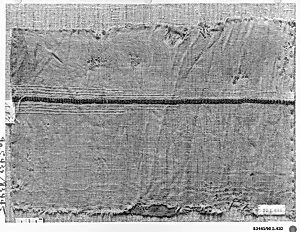
Medium
Wool, linen; plain weave, tapestry weave (?)
Dimensions
Max. H. 9 13/16 in. (25 cm) Max. W. 6 3/8 in. (16.2 cm)
Classification
Textiles
Department
Islamic Art
Museum
Metropolitan Museum of Art, New York, NY
Credit
Gift of George F. Baker, 1890
Accession Number
90.5.432
Rights
Public Domain
Art Historical Context
This exquisite *Textile Fragment*, dating to the 2nd–3rd century, offers a rare glimpse into the sophisticated world of ancient weaving traditions preserved in the Metropolitan Museum of Art's Art department. Crafted from wool and linen plain weave for the foundation and tapestry weave (as suggested by its structure), this small piece—measuring just 9 13/16 by 6 3/8 inches—survived the ages as a testament to early textile artistry. Donated in 1890 by George F. Baker, it highlights the museum's commitment to collecting fragments that whisper stories of daily life and craftsmanship. The use of combined weaves points to skilled artisans who blended durability with decorative potential, common in regions where textiles served both practical and ornamental roles. Though the artist remains unknown, such fragments are invaluable for understanding pre-Islamic influences on later Islamic textile traditions, from clothing to furnishings. Their fragility underscores how few survive, making this one a precious artifact. Visitors, imagine the hands that wove it amid bustling ancient markets— a tiny portal to a vibrant, threadbare past!