
Textile Fragment
Unknown Artist
3rd–4th century
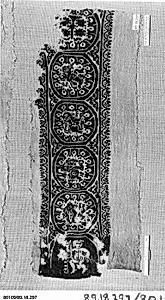
Medium
Wool, linen; plain weave, tapestry weave
Dimensions
H. 14 in. (36.8 cm) W. 4 in. (10.2 cm)
Classification
Textiles
Department
Islamic Art
Museum
Metropolitan Museum of Art, New York, NY
Credit
Purchase by subscription, 1889
Accession Number
89.18.297
Rights
Public Domain
Art Historical Context
This delicate textile fragment, dating to the 3rd–4th century, offers a glimpse into the sophisticated weaving traditions of the ancient Near East or Egypt during the Late Antique period. Housed in the Metropolitan Museum of Art's Department of Islamic Art, it early textiles that bridged Roman, Byzantine, and pre-Islamic cultures, later preserved in Islamic collections. Though small—measuring just 14 inches high by 4 inches wide—this wool and linen piece was likely part of a larger garment, curtain, or furnishing, highlighting everyday artistry in a time when textiles were prized for both utility and beauty. Crafted using plain weave for the sturdy ground fabric and tapestry weave for colorful motifs, the fragment showcases advanced techniques that allowed weavers to create vibrant, durable designs without modern dyes or looms. Tapestry weave, where colored weft threads are woven directly into the warp to form patterns, was labor-intensive yet produced richly textured results ideal for trade and personal adornment. Such methods reflect the technical prowess of anonymous artisans whose work influenced centuries of textile production. Acquired through a purchase by subscription in 1889, this fragment underscores the Met's commitment to collecting artifacts that reveal cultural exchanges across eras. For visitors, it’s a tangible link to lives long past, inviting wonder at the enduring skill of hands that wove history itself.