
Textile Fragment
Unknown Artist
4th century
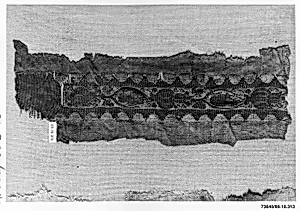
Medium
Wool, linen; plain weave, tapestry weave
Dimensions
Max. H. 13 in. (33 cm) Max. W. 4 5/16 in. (11 cm)
Classification
Textiles
Department
Islamic Art
Museum
Metropolitan Museum of Art, New York, NY
Credit
Purchase by subscription, 1889
Accession Number
89.18.313
Rights
Public Domain
Art Historical Context
This delicate textile fragment, dating to the 4th, offers a rare glimpse into the sophisticated weaving traditions of late antiquity. Crafted from wool and linen using a combination of plain weave for the ground fabric and tapestry weave for colorful motifs, it exemplifies early techniques where weft threads in vibrant dyes were inserted selectively to create patterns without waste. At just 13 inches high and 4⅜ inches wide, such fragments often survived in arid regions like Egypt, preserving what would otherwise perish. Housed in the Metropolitan Museum of Art's Department of Islamic Art and acquired through subscription purchase in 1889, this piece highlights the cultural continuum in textile arts across the ancient Near East and North Africa. Though pre-Islamic, it reflects the technical prowess that influenced later Islamic weaving, where textiles served practical and decorative roles in daily life, trade, and ritual. Its survival underscores the artistry of anonymous makers, whose innovations in color and pattern bridged classical and medieval worlds, inviting us to marvel at these tiny threads of history.