
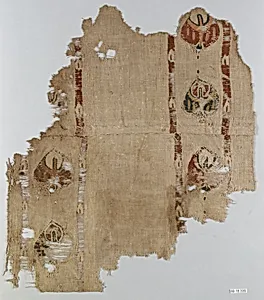
Textile Fragment
Unknown Artist
5th century
Medium
Wool, linen; plain weave, tapestry weave
Dimensions
Max. H. 16 1/8 in. (41 cm) Max. W. 14 3/16 in. (36 cm)
Classification
Textiles
Department
Islamic Art
Museum
Metropolitan Museum of Art, New York, NY
Credit
Purchase by subscription, 1889
Accession Number
89.18.335
Rights
Public Domain
Art Historical Context
This exquisite Textile Fragment, dating to the 5th century, offers a glimpse into the sophisticated textile arts of the early Islamic world. Crafted from wool and linen using plain weave for the foundation and tapestry weave for decorative elements, it measures approximately 16 by 14 inches. Acquired by the Metropolitan Museum of Art through a subscription purchase in 1889, it resides in the museum's Islamic Art Department, highlighting the enduring legacy of Near Eastern craftsmanship. The plain weave provided a sturdy ground cloth, while the tapestry technique—where colored wefts are woven directly into the fabric to form patterns—allowed artisans to create vibrant motifs without additional sewing. This labor-intensive method was prized in antiquity for garments, furnishings, and ceremonial objects, reflecting advanced technical skill and access to dyed fibers. Though the artist remains unknown and the fragment survives only partially, its survival underscores the fragility and cultural value of textiles from this era. In a time of dynamic cultural exchanges across the Mediterranean and Persia, such pieces connected daily life with artistry, evoking the colors and textures of a vibrant ancient society.