
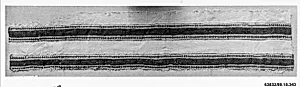
Textile Fragment
Unknown Artist
3rd–4th century
Medium
Wool, linen; plain weave, tapestry weave
Dimensions
H. 26 3/16 in. (66.5 cm) W. 1 7/16 in. (3.6 cm)
Classification
Textiles
Department
Islamic Art
Museum
Metropolitan Museum of Art, New York, NY
Credit
Purchase by subscription, 1889
Accession Number
89.18.343
Rights
Public Domain
Art Historical Context
This delicate *Textile Fragment*, dating to the 3–4th century, a glimpse into the sophisticated weaving traditions of the early Islamic world. Crafted from wool and linen using plain weave for the foundation and tapestry weave for decorative elements, it measures an elongated 26 3/16 inches high by just 1 7/16 inches wide—likely part of a larger garment band, curtain edging, or ritual cloth. Acquired by the Metropolitan Museum of Art subscription purchase in 1889 it resides in the museum's Islamic Art Department, highlighting the enduring legacy of pre-Islamic textile arts in regions that shaped later Islamic culture. The use of tapestry weave, where colored weft threads are woven over foundation warps to create patterns, was a labor-intensive technique prized for its vibrant motifs and durability. Common in Late Antique Egypt, Syria, and Mesopotamia, such fragments reveal the daily artistry of anonymous weavers who blended functionality with beauty. Wool provided warmth and colorfastness, while linen offered a crisp structure, making these textiles essential for clothing, furnishings, and trade. Though small, this fragment underscores the cultural importance of textiles as portable wealth and status symbols in ancient societies. Its survival speaks to the resilience of organic materials and the meticulous conservation efforts that bring these ancient hands back to life for us today.