
Textile Fragment
Unknown Artist
3rd–4th century
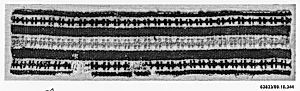
Medium
Wool, linen; plain weave, tapestry weave
Dimensions
Max. H. 13 in. (33 cm) Max. W. 2 13/16 in. (7.1 cm)
Classification
Textiles
Department
Islamic Art
Museum
Metropolitan Museum of Art, New York, NY
Credit
Purchase by subscription, 1889
Accession Number
89.18.344
Rights
Public Domain
Art Historical Context
This delicate *Textile Fragment* from 3rd–4th century offers a rare glimpse into the artistry of everyday life in the ancient Near East or Egypt during the Late Antique period. Acquired by the Metropolitan Museum of Art through a subscription purchase in 188, this small piece—measuring just 13 inches high and under 3 inches wide—survives as a testament to the fragility and endurance of ancient fabrics. Housed in the museum's Islamic Art department, reflects the cultural continuum between pre-Islamic and later Islamic textile traditions. Crafted from wool and linen using plain weave for the ground and tapestry weave for decorative elements, the fragment showcases sophisticated techniques. Plain weave provided a sturdy base, while tapestry weave—where colored weft threads are woven discontinuously to form patterns—allowed for vibrant motifs without wasting material. These methods were labor-intensive, often produced by skilled weavers for garments, furnishings, or mummy wrappings in regions like Coptic Egypt. Though details of its exact design are limited, such fragments hold immense value: they reveal dyeing expertise with natural pigments, trade in fibers across the Mediterranean, and the role of textiles in ritual and status. Standing before it, imagine the hands that wove this sliver of history over 1,700 years ago, bridging ancient worlds to our own.