
Textile Fragment
Unknown Artist
5th century
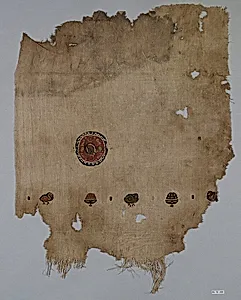
Medium
Wool, linen; plain weave, tapestry weave
Dimensions
Max. H. 14 3/8 in. (36.5 cm) Max. W. 12 3/16 in. (31 cm)
Classification
Textiles
Department
Islamic Art
Museum
Metropolitan Museum of Art, New York, NY
Credit
Purchase by subscription, 1889
Accession Number
89.18.356
Rights
Public Domain
Art Historical Context
This exquisite Textile Fragment, dating to the 5th, offers a rare glimpse into the masterful weaving traditions of the early Islamic world—or its cultural predecessors in the Near East. Crafted from wool and linen using plain weave for the foundation and tapestry weave for decorative motifs, it measures about 14 inches high and 12 inches wide. Acquired by the Metropolitan Museum of Art 1889 through public subscription, it resides in the Islamic Art department highlighting the continuity of textile arts across late antiquity and into Islamic times. The dual weaving techniques showcase sophisticated craftsmanship: plain weave provided a sturdy ground, while tapestry weave allowed artisans to create vibrant, discontinuous patterns with colored wefts, a method ideal for intricate designs without waste. Such fragments often featured geometric motifs, animals, or figures, reflecting the era's vibrant trade routes linking Egypt, Syria, and Persia, where wool and linen were prized for durability and dye vibrancy. As a survivor from over 1,500 years ago, this piece underscores the cultural importance of textiles in daily life, rituals, and commerce. Though the artist remains unknown, its preservation reveals how these portable artworks bridged empires, influencing later Islamic decorative arts and offering modern visitors a tactile connection to ancient ingenuity.