
Textile Fragment
Unknown Artist
3rd–4th century
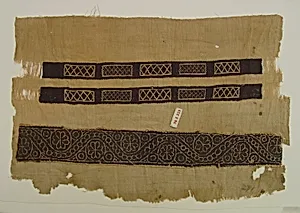
Medium
Wool, linen; plain weave, tapestry weave
Dimensions
Max. H. 14 in. (35.6 cm) Max. W. 9 in. (22 cm)
Classification
Textiles
Department
Islamic Art
Museum
Metropolitan Museum of Art, New York, NY
Credit
Gift of George F. Baker, 1890
Accession Number
90.5.320
Rights
Public Domain
Art Historical Context
This delicate Textile Fragment, dating to the 3rd–4th century, offers a glimpse into the sophisticated textile traditions of the early Islamic world. Crafted from wool and linen using plain weave for the sturdy ground fabric and tapestry weave for intricate motifs, it exemplifies the technical mastery of ancient weavers. These techniques allowed for vibrant, durable designs that adorned clothing, furnishings, or ceremonial objects, reflecting everyday life and cultural exchanges across trade routes in regions like Egypt or the Near East. Housed in the Metropolitan Museum of Art's Islamic Art Department, this fragment—measuring just 14 by 9 inches—survived centuries buried in arid sands, preserving colors and details that organic materials rarely endure. Its classification as a textile underscores the era's reliance on weaving as both art and industry, where wool provided warmth and linen breathability. Donated in 1890 by George F. Baker, it highlights early collecting passions that brought these treasures to public view. Though the specific motifs are not detailed here, such pieces often featured geometric patterns or figures, bridging Late Antique and emerging Islamic aesthetics—inviting us to ponder the weavers' world of looms, dyes, and stories woven in thread.