
Fragment of a Tunic
Unknown Artist
3rd–4th century
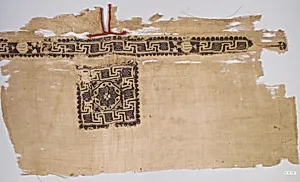
Medium
Wool, linen; plain weave, tapestry weave, applied braid
Dimensions
Max. H. 24 5/8 in. (62.5 cm) Max. W. 14 in. (35.5 cm)
Classification
Textiles
Department
Islamic Art
Museum
Metropolitan Museum of Art, New York, NY
Credit
Purchase by subscription, 1889
Accession Number
89.18.148
Rights
Public Domain
Art Historical Context
This delicate *Fragment of a Tunic transports us to the 3rd–4th century, a pivotal era bridging late antiquity and the early Islamic world. Crafted from wool and linennatural fibers ideal for the region's warm climate—this piece measures about 25 by 14 inches and was acquired by the Metropolitan Museum of Art in 1889 through public subscription, highlighting its early recognition as a treasure. The tunic's construction showcases masterful textile techniques: a plain weave forms the sturdy base, while vibrant tapestry weave adds decorative motifs, and applied braid provides elegant edging. These methods, common in ancient Near Eastern and Egyptian workshops, reflect the sophisticated looms and dyers of the time, where everyday garments doubled as canvases for artistry. Housed in the Met's Islamic Art department, this fragment offers a rare glimpse into pre-Islamic clothing traditions that influenced later Islamic textiles. Its survival underscores the enduring cultural value of such artifacts, revealing how ordinary people adorned themselves with skill and style amid shifting empires. A testament to anonymous artisans' ingenuity!