
Textile Fragment
Unknown Artist
7th–8th century
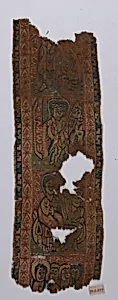
Medium
Wool, linen; plain weave, tapestry weave
Dimensions
Max. H. 12 3/16 in. (31 cm) Max. W. 3 15/16 in. (10 cm)
Classification
Textiles
Department
Islamic Art
Museum
Metropolitan Museum of Art, New York, NY
Credit
Gift of George F. Baker, 1890
Accession Number
90.5.527
Rights
Public Domain
Art Historical Context
This delicate Textile Fragment, dating to the 7th–8th century, offers a glimpse into the early Islamic world, when artisans across the expanding caliphates blended local traditions from Egypt, Persia, and beyond. Housed in the Metropolitan Museum of Art's Islamic Art Department, this small piece—measuring just over 12 inches high and 4 inches wide—was a generous gift from George F. Baker in 1890. Though its creator remains unknown, such fragments were likely parts of garments, furnishings, or ceremonial textiles, preserving vibrant threads of history amid the sands of time. Crafted from wool and linen using plain weave for structure and tapestry weave for colorful detailing, the fragment showcases sophisticated techniques that allowed weavers to create intricate patterns without modern machinery. Tapestry weave, in particular, interlaces colored weft yarns to form motifs, a method prized in Islamic art for its durability and visual richness. These textiles were cultural treasures, adorning tents, mosques, and elite wardrobes, symbolizing wealth and piety. Though worn by centuries, this fragment whispers of an era's artistic ingenuity, inviting us to imagine the hands that wove it and the lives it touched. A testament to enduring craftsmanship! (198 words)