
Textile Fragment
Unknown Artist
5th century
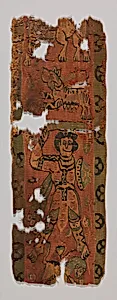
Medium
Wool, linen; tapestry weave
Dimensions
Max. H. 11 13/16 in. (30 cm) Max. W. 4 1/8 in. (10.5 cm)
Classification
Textiles
Department
Islamic Art
Museum
Metropolitan Museum of Art, New York, NY
Credit
Gift of George F. Baker, 1890
Accession Number
90.5.586
Rights
Public Domain
Tags
Art Historical Context
This exquisite textile fragment, dating to the 5th, offers a glimpse into the vibrant of ancient Near Eastern artistry. Woven in tapestry technique from wool and linen, it measures just 11 13/16 by 4 1/8 inches, yet bursts with dynamic motifs of warriors brandishing shields and swords alongside fierce animals, likely lions. Housed in the Metropolitan Museum of Art's Art Department—a gift from George F. Baker in 1890—this rare survivor captures the martial spirit of its era, possibly from regions like Egypt, Syria, or Persia under Sassanian influence. The tapestry weave, where colored weft yarns create the image directly in the fabric, was a masterful method prized for its durability and rich colorfastness, ideal for garments, saddle covers, or wall hangings. Such textiles bridged daily life and symbolism: warriors evoked protection and valor, while lions represented royal power and ferocity, motifs echoing across pre-Islamic cultures that later shaped Islamic art. Though small, this fragment illuminates early textile traditions, preserving techniques and iconography from a pivotal time before Islam's rise, inviting us to marvel at the skilled, anonymous hands that wove history into thread.