
Textile Fragment
Unknown Artist
4th–5th century
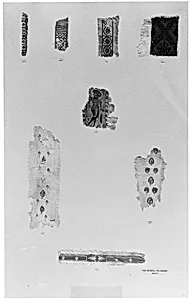
Medium
Wool, linen; plain weave, tapestry weave (?)
Dimensions
Max. H. 4 9/16 in. (11.6 cm) Max. W. 1 3/4 in. (4.5 cm)
Classification
Textiles
Department
Islamic Art
Museum
Metropolitan Museum of Art, New York, NY
Credit
Gift of George F. Baker, 1890
Accession Number
90.5.668
Rights
Public Domain
Art Historical Context
This delicate textile fragment, dating to the 4th–5th century, offers a glimpse into the everyday artistry of Late Antiquity in the Near East or Egypt. Crafted from wool and linen using plain weave—a simple, sturdy technique for everyday fabrics—along with possible tapestry weave elements, it measures just 4 9/16 x 1 3/4 inches, suggesting it is a surviving piece from a larger garment, curtain, or furnishing. Such small remnants are treasures, preserved through centuries and now housed in the Metropolitan Museum of's Department of Islamic Art, thanks a gift from George F. Baker in 1890. The use of natural fibers like wool for warmth and linen for breathability reflects advanced textile traditions in a region bridging Roman, Byzantine, and early Islamic worlds. Tapestry weave, if present, would indicate skilled labor-intensive patterning, where colored weft threads create designs without additional embroidery— a precursor to the intricate motifs seen in later Islamic textiles. Though tiny and by an unknown artist, this fragment highlights the cultural continuity of craftsmanship in the pre-Islamic era, underscoring how textiles were vital to trade, identity, and daily life. Visitors can appreciate its quiet elegance as a window into a vibrant, interconnected ancient world.