
Textile Fragment
Unknown Artist
5th–6th century
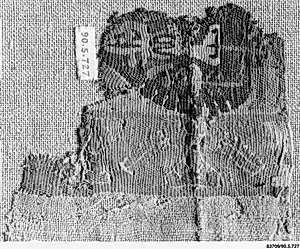
Medium
Wool, linen; plain weave, tapestry weave
Dimensions
Max. H. 12 3/16 in. (31 cm) Max. W. 4 15/16 in. (12.5 cm)
Classification
Textiles
Department
Islamic Art
Museum
Metropolitan Museum of Art, New York, NY
Credit
Gift of George F. Baker, 1890
Accession Number
90.5.727
Rights
Public Domain
Art Historical Context
This delicate textile fragment, dating to the 5th–6th century, offers a tantalizing glimpse into the sophisticated weaving traditions of the Late Antique world, preserved in The Metropolitan Museum of Art's of Islamic Art. Likely originating from regions like Egypt or the Near East—areas pivotal to the cultural transitions leading into the Islamic era—this small piece (just over 12 inches tall and 5 inches wide) survives as a testament to everyday artistry amid the bustling trade routes of antiquity. Crafted from wool and linen, it plain weave for structural strength with tapestry weave, a labor-intensive technique where colored weft threads are woven directly into the fabric to create patterns. This method, prized for its durability and visual richness, was essential for garments, furnishings, and ceremonial objects, highlighting the weavers' mastery of natural dyes and precise craftsmanship in an era before mechanized production. Generously gifted to the Museum in 1890 by George F. Baker, this fragment underscores the fragility and enduring allure of ancient textiles. Though worn by time, it connects us to the anonymous artisans whose skills influenced centuries of Islamic textile innovation, from opulent Coptic designs to later Abbasid splendor. A quiet survivor, it invites us to marvel at the threads binding history together.