
Textile Fragment
Unknown Artist
6th–7th century
Medium
Wool, linen; tapestry weave
Dimensions
Max. H. 7 1/2 in. (19 cm) Max. W. 36 1/4 in. (92 cm)
Classification
Textiles
Department
Islamic Art
Museum
Metropolitan Museum of Art, New York, NY
Credit
Gift of George F. Baker, 1890
Accession Number
90.5.812
Rights
Public Domain
Tags
Art Historical Context
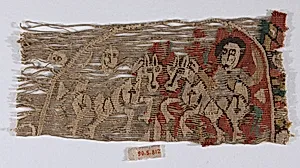
This exquisite textile fragment, dating to the 6th–7th century, offers a rare glimpse into the vibrant world of early Islamic art. Woven in wool and linen using the technique—where discontinuous wefts create colorful, detailed patterns—this narrow strip (max. 7½ in. high by 36¼ in. wide) likely originated in the Near East or Egypt Tapestry weave was prized for its durability and ability to produce intricate scenes, making such textiles ideal for garments, furnishings, or ceremonial hangings. The fragment features lively depictions of horses and human figures, motifs that evoke hunting scenes, processions, or daily life, common in Late Antique and early Islamic traditions. These figural representations highlight a transitional period before stricter aniconism, blending Sasanian, Byzantine, and local influences. Horses, symbols of speed, power, and nobility, were especially popular, underscoring the cultural reverence for equestrian prowess. Preserved as a gift to the Metropolitan Museum of Art in 1890 by George F. Baker, this piece exemplifies the technical mastery of ancient weavers and the enduring allure of textiles as storytelling mediums. Though fragmented, it invites us to imagine the opulent tapestries that once adorned elite spaces.