
Textile Fragment
Unknown Artist
6th–7th century
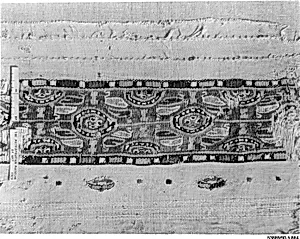
Medium
Linen, wool
Dimensions
Max. H. 18 11/16 in. (47.5 cm) Max. W. 7 3/4 in. (19.7 cm)
Classification
Textiles
Department
Islamic Art
Museum
Metropolitan Museum of Art, New York, NY
Credit
Gift of George F. Baker, 1890
Accession Number
90.5.864
Rights
Public Domain
Art Historical Context
This delicate textile fragment, dating to the 6th–7th century, offers a rare glimpse into the early world of Islamic art. Housed in the Metropolitan Museum of Art's Islamic Art Department, it measures about 18½ by 7¾ inches and was generously gifted by George F. Baker in 1890. Crafted from linen and wool—staple fibers of the era—this piece likely originated from regions like Egypt or the Near East, where textiles were essential for clothing, furnishings, and trade along ancient Silk Road routes. The use of linen provided a lightweight, breathable base, while wool added durability and vibrant dye potential, showcasing the sophisticated weaving techniques of the time. Such fragments are invaluable survivors, as organic materials rarely endure centuries. They reveal the artistic ingenuity of unknown artisans during a pivotal transition from Late Antiquity to the early Islamic period, when intricate patterns and motifs began influencing broader cultural exchanges. For visitors, this humble remnant underscores textiles' profound role in daily life and artistic expression, bridging history's threads with timeless elegance.