
Textile Fragment
Unknown Artist
3rd–4th century
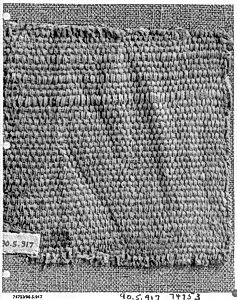
Medium
Linen
Dimensions
Max. H. 3 15/16 in. (10 cm) Max. W. 3 15/16 in. (10 cm)
Classification
Textiles
Department
Islamic Art
Museum
Metropolitan Museum of Art, New York, NY
Credit
Gift of George F. Baker, 1890
Accession Number
90.5.917
Rights
Public Domain
Art Historical Context
This delicate linen textile fragment, dating to the 3rd–4th century, offers a rare glimpse into the artistry of Late Antiquity. Measuring just under 4 inches square, it survives as a testament to the skilled weaving traditions of the ancient world, likely originating from Egypt—a hub of textile production during this era. Classified within the Metropolitan Museum of Art Islamic Art department, such fragments bridge pre-Islamic and early Islamic cultural exchanges, highlighting how linen, prized for its durability and breathability in the hot climate, was transformed into everyday garments, furnishings, and ritual cloths. Linen textiles from this period showcase advanced techniques like plain weave or tapestry, often adorned with motifs drawn from nature, mythology, or daily life, though this small piece preserves only echoes of those vibrant designs. Their scarcity underscores their historical value: organic materials rarely endure millennia, making survivors like this one invaluable for understanding ancient economies, trade routes (such as those linking the Mediterranean to the East), and social customs. A generous gift from George F. Baker in 1890, this fragment invites us to marvel at the anonymous hands that wove it, connecting us across centuries to a world where thread told stories of faith, fashion, and ingenuity.