
Textile Fragment
Unknown Artist
late 11th century
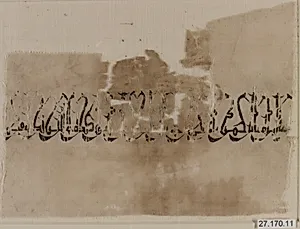
Medium
Linen, silk
Dimensions
L. 5 in. (12.7 cm) W. 7 1/2 in. (19.1 cm)
Classification
Textiles-Woven
Department
Islamic Art
Museum
Metropolitan Museum of Art, New York, NY
Credit
Rogers Fund, 1927
Accession Number
27.170.11
Rights
Public Domain
Art Historical Context
This delicate *Textile Fragment*, dating to the late 11th century, a tantalizing glimpse into the refined world of Islamic textile production. Crafted from linen and silk using woven techniques, it measures just 5 by 7½ inches, likely a surviving piece from a larger garment, curtain, or furnishing. Acquired through the Rogers Fund in 1927, it now resides in the Metropolitan Museum Art's Department of Islamic Art, classified among woven textiles that highlight the era's mastery of luxurious fabrics. In the medieval Islamic world, textiles like this were prized symbols of wealth and craftsmanship, often traded along Silk Road routes connecting the Middle East, Central Asia, and beyond. The combination of sturdy linen with opulent silk underscores the technical sophistication of weavers, who blended durability with sheen for elite patrons—think caliphs, merchants, or mosque decorators. Though the artist remains unknown, such fragments reveal how Islamic artisans elevated everyday weaving into high art, influencing global design traditions. Preserved for over nine centuries, this tiny artifact speaks volumes about cultural exchange and impermanence. Organic materials rarely survive, making it a rare window into daily opulence during a dynamic period of Islamic history, just as empires like the Seljuks rose and Crusades loomed. A quiet testament to forgotten hands at the loom.