
Tiraz Textile Fragment
Unknown Artist
ca. 991–1031
Medium
Linen; plain weave, embroidered in silk
Dimensions
Textile: L. 4 5/8 in. (11.7 cm) W. 6 3/8 in. (16.2 cm) Mount: H. 8 3/8 in. (21.3 cm) W. 21 3/8 in. (54.3 cm) D. 1 1/8 in. (2.9 cm)
Classification
Textiles-Embroidered
Department
Islamic Art
Museum
Metropolitan Museum of Art, New York, NY
Credit
Gift of George D. Pratt, 1931
Accession Number
31.106.56b
Rights
Public Domain
Tags
Art Historical Context
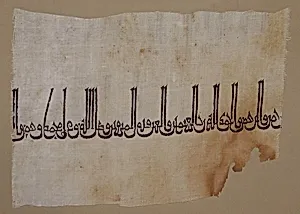
This delicate **Tiraz Textile Fragment**, dating to around 991–1031, hails from the Islamic world and exemplifies the refined artistry of medieval textile production. Woven in plain linen and embroidered with lustrous silk threads, the fragment measures a modest 4⅝ × 6⅜ inches (11.7 × 16.2 cm). Displayed in the Metropolitan Museum of Art's Islamic department—thanks to a 1931 gift from D. Pratt—it invites visitors to marvel at a surviving piece of ancient luxury. Tiraz textiles like this one were prestige items crafted in state-sponsored workshops, often featuring Arabic inscriptions that named rulers, invoked blessings, or marked official workshops. Produced during a golden age of Islamic caliphates, they adorned elite garments, turbans, or banners, symbolizing power and piety. The silk embroidery on linen highlights innovative techniques: silk's sheen and durability contrasted the linen's practicality, ensuring both beauty and longevity in daily wear. Though small, this fragment reveals the cultural importance of textiles in Islamic society, where such embroidered works bridged art, politics, and devotion. A window into 11th-century craftsmanship, it reminds us how everyday materials could convey imperial grandeur.