
Textile Fragment
Unknown Artist
late 17th century
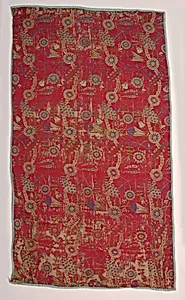
Medium
Silk, metal wrapped thread
Dimensions
Textile: L. 26 in. (66 cm) W. 46 in. (116.8 cm)
Classification
Textiles-Woven
Department
Islamic Art
Museum
Metropolitan Museum of Art, New York, NY
Credit
Gift of Joseph V. McMullan, 1970
Accession Number
1970.65.3
Rights
Public Domain
Art Historical Context
This exquisite *Textile Fragment* from the late 17th century hails from the Islamic world, showcasing the unparalleled craftsmanship of woven textiles during a golden age of luxury arts. Crafted from silk and intricate metal-w threads, it measures 26 by 46 inches, likely a surviving piece from a larger garment, curtain, or ceremonial hanging. Donated to the Metropolitan Museum of Art in1970 by Joseph V McMullan, it in the Department of Islamic Art, where whispers tales of opulent courts in regions like the Ottoman Empire or Safavid Persia. The use of metal-wrapped threads—fine wires of gold or silver coiled around silk cores—elevates this woven textile to a status symbol, reflecting advanced techniques such as brocading or lampas weaves. These methods allowed artisans to create rich, metallic patterns that caught the light, symbolizing wealth and divine favor in Islamic culture. Such fragments were often produced in imperial workshops, where master weavers blended functionality with artistry. Today, this fragment invites us to marvel at the enduring allure of Islamic textiles, bridging 17th-century splendor with our modern gaze. Its preservation highlights the fragility and magnificence of these cultural treasures. (198 words)