
Textile Fragment
Unknown Artist
17th century
Medium
Silk, metal wrapped thread
Dimensions
L. 59 in. (149.9 cm) W. 25 1/2 in. (64.8 cm)
Classification
Textiles-Woven
Department
Islamic Art
Museum
Metropolitan Museum of Art, New York, NY
Credit
Gift of Joseph V. McMullan, 1970
Accession Number
1970.65.7
Rights
Public Domain
Art Historical Context
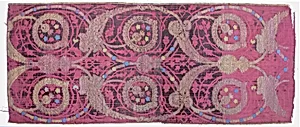
This exquisite *Textile Fragment* from the 17th century hails from the Metropolitan Museum of Art's Islamic Art Department, a generous gift from Joseph V. McMullan in 1970. Measuring an impressive 59 inches long by 25½ inches wide, it is woven from luxurious silk interwoven with metal-wrapped threads, creating a shimmering, opulent surface that catches the light with every angle. As a surviving piece of a larger textile, it invites us to imagine its original grandeur—perhaps as part of an elite garment, ceremonial hanging, or furnishings for a wealthy household. In the vibrant world of 17th-century Islamic art, woven textiles like this represented the pinnacle of craftsmanship, blending technical innovation with aesthetic splendor. Artisans employed complex loom techniques, such as brocading or lampas weaving, to integrate the gleaming metal threads—often silver or gold wire wound around silk cores—into vibrant silk grounds. These fabrics were symbols of status and piety, traded along Silk Road routes from Persia and the Ottoman Empire to Europe, embodying cultural exchange and economic prowess. Though the artist remains unknown, this fragment exemplifies the enduring legacy of Islamic textile traditions, where beauty met functionality in everyday luxury. Pause and admire how its tactile richness transports us to bustling workshops of the past!