
Textile Fragment
Unknown Artist
ca. 1094–1101
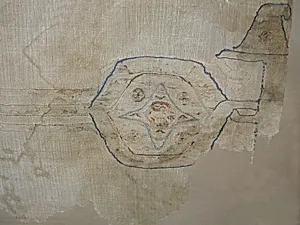
Medium
Linen; tapestry weave
Classification
Textiles-Woven
Department
Islamic Art
Museum
Metropolitan Museum of Art, New York, NY
Credit
Rogers Fund, 1974
Accession Number
1974.113.14b
Rights
Public Domain
Art Historical Context
This exquisite *Textile Fragment*, dating to around 1094–1101, offers a glimpse into the sophisticated world of Islamic textile artistry during the late 11th. Housed in the Metropolitan Museum of Art's of Islamic Art and acquired through the Rogers Fund in 1974, this linen piece exemplifies the era's mastery of woven fabrics, which were prized for clothing, furnishings, and ceremonial use across the Islamic world—from Egypt to Persia. Crafted in tapestry weave, a technique where colored weft threads are woven discontinuously to form distinct motifs, the fragment highlights the labor-intensive precision of Islamic weavers. This method allowed for vibrant, durable patterns without relying on dyes that might fade, making it ideal for high-status objects. Though the artist remains unknown, such textiles were often produced in urban workshops, reflecting cultural values of geometry, abstraction, and opulence central to Islamic design traditions. As a rare survivor—likely from a garment or hanging—this fragment underscores the fragility and historical value of textiles, which rarely endure compared to stone or metal. Visitors can marvel at how it bridges art and daily life in a dynamic period of Islamic innovation, just before the Crusades reshaped the region. (198 words)