
Textile Fragment
Unknown Artist
early 17th century
Medium
Silk, metal thread
Dimensions
H. 11 1/8 in. (28.3 cm) W. 11 1/8 in. (28.3 cm)
Classification
Textiles
Department
Islamic Art
Museum
Metropolitan Museum of Art, New York, NY
Credit
Gift of Nanette B. Kelekian, in honor of Olga Raggio, 2002
Accession Number
2002.494.690
Rights
Public Domain
Tags
Art Historical Context
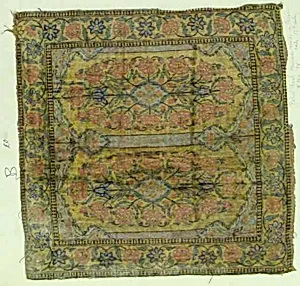
This exquisite textile fragment, dating to the early 17 century, hails from the Islamic world and showcases the opulence of luxury fabrics from that era. Crafted from shimmering silk woven with intricate metal threads, the square piece measures just over 11 inches on each side. Its delicate floral motifs—likely blooming flowers rendered in vibrant patterns—evoke the paradisiacal gardens celebrated in Islamic art, a theme symbolizing beauty, abundance, and the divine. In the Islamic tradition, textiles like this were prized possessions, often adorning elite garments, turbans, or ceremonial hangings. The use of silk provided a luxurious sheen and durability, while metal threads—possibly gold or silver lamé—added a reflective, jewel-like quality through techniques such as couching or brocading. These methods demanded exceptional skill from weavers in workshops across regions like the Ottoman Empire or Safavid Persia, where such fragments might survive from larger panels. Today, preserved at The Metropolitan Museum of Art through a generous gift, this fragment offers a window into the refined artistry of 17th-century Islamic culture. Though incomplete, it whispers of the splendor once enjoyed by the elite, inviting us to imagine its vibrant role in a sumptuous past.