
Textile Fragment
Unknown Artist
first half 16th century
Medium
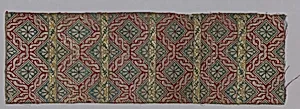
Silk, metal wrapped thread; taqueté (seraser)
Dimensions
Textile: H. 17 7/8 in. (45.4 cm) W. 5 3/4 in. (14.6 cm)
Classification
Textiles-Brocades
Department
Islamic Art
Museum
Metropolitan Museum of Art, New York, NY
Credit
Purchase, Rogers Fund, Louis E. and Theresa S. Seley Purchase Fund for Islamic Art, and The Page and Otto Marx Jr. Foundation Gift, 2003
Accession Number
2003.519
Rights
Public Domain
Art Historical Context
This exquisite textile fragment, dating to the first half of the 16th century hails from the Islamic world and exemplifies the opulent brocade traditions of the era. Woven from luxurious silk yarns supplemented with metal-wrapped threads it measures just 17⅞ by 5¾ inches, yet its preserved vibrancy speaks volumes about the mastery of its unknown artisans. Acquired by The Metropolitan Museum of Art in2003 through generous funds, it now graces the Department of Islamic Art, offering a tangible link to a golden age of craftsmanship. The fragment's taqueté weave—specifically the seraser variant—represents a sophisticated technique where weft-faced patterning creates a dense, tapestry-like surface ideal for intricate designs and metallic sheen. This method, prized in Islamic textiles, allowed for bold motifs and shimmering effects that adorned elite garments, furnishings, and ceremonial objects, symbolizing wealth and piety. The use of metal threads not only enhanced durability and luster but also evoked the celestial light revered in Islamic culture. Though a modest fragment, it highlights the technical innovation and aesthetic refinement of 16th-century Islamic weaving centers, possibly in the Ottoman or Safavid realms. Visitors can marvel at how such pieces transformed everyday luxury into art, bridging history and beauty in our virtual galleries.