
Panel (sleeveband)
Qing dynasty (1644–1911), 1875/1900
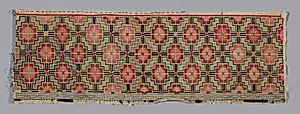
Medium
embroidered gauze
Dimensions
13 × 38.2 cm (5 1/8 × 15 in.)
Classification
textile
Department
Textiles
Museum
Art Institute of Chicago
Accession Number
156139
Rights
Public Domain
Art Historical Context
This delicate embroidered gauze panel, known as a sleeveband, hails from China's Qing dynasty (1644–1), crafted by Han-Chinese artisans around1875–1900. Measuring just 13 × 38.2 cm, it have adorned the sleeve of a formal robe, a common feature in elite Han clothing during the late imperial era. As part of the Art Institute of Chicago's Textiles collection, it exemplifies the refined craftsmanship of Qing textile arts, blending functionality with opulent decoration. Embroidered on gauze—a lightweight, translucent silk weave—the panel showcases masterful needlework techniques like satin stitch and intricate patterning, which allowed motifs to shimmer through the fabric. Gauze's airy quality not only enhanced visual elegance but also symbolized refinement and status, often reserved for scholarly or ceremonial garments amid the dynasty's cultural flourishing. Qing textiles like this reflect Han-Chinese resilience and aesthetic traditions under Manchu rule, preserving motifs of nature, longevity, and prosperity. Pause to admire the precision: each thread tells a story of imperial splendor and everyday luxury in 19th-century China.
About the Artist
Han-Chinese
**Han-Chinese** was the collective attribution given to anonymous artisans of Han Chinese descent who crafted intricate embroidered textiles during the Qing dynasty (1644–1911). These makers, active primarily in the late 18th to early 20th centuries, specialized in luxurious garments and furnishings that showcased the pinnacle of Han Chinese needlework traditions. Their early lives and individual ...