
Textile
Medium
printed, dyed & painted textiles
Classification
printed, dyed & painted textiles
Department
Smithsonian Collection
Museum
Smithsonian American Art Museum
Credit
Museum purchase from General Acquisitions Endowment Fund
Accession Number
1989-71-1-a,b
Rights
Public Domain
About this artwork
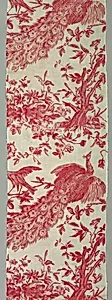
Peacock, parrot and magpie with foliage and flowers, printed in red on white.
Art Historical Context
This vibrant textile, created by the French workshop Gayet et Montgirod between 1760 and 1761, showcases a lively scene of a peacock, parrot, and magpie amid lush foliage and flowers, all printed in bold red on crisp white ground. Produced during the height of the Rococo era, it captures the period's delight in nature's extravagance, where exotic birds symbolized beauty, mimicry, and whimsy—perfect for adorning fashionable homes or garments. The medium of printed, dyed, and painted textiles represents a technological leap in 18th-century textile production. Workshops like Gayet et Montgirod mastered woodblock printing techniques, allowing intricate designs to be replicated efficiently on cotton or linen. This innovation democratized luxury patterns, bridging artisanal craftsmanship with emerging industrial methods and influencing global trade in decorative arts. Now part of the Smithsonian American Art Museum's collection through a generous museum purchase, this piece offers a window into Enlightenment-era aesthetics, blending natural observation with playful artistry. Visitors will appreciate its enduring colorfastness and the joyful energy that still animates these feathered friends centuries later.