
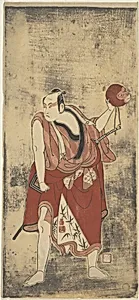
The Actor Ichikawa Komazo I as a Man Holding a Monkey Mask
1764–71
Medium
Woodblock print; ink and color on paper
Dimensions
H. 12 3/4 in. (32.4 cm); W. 5 7/8 in. (14.9 cm)
Classification
Prints
Culture & Period
Japan · Edo period (1615–1868)
Department
Asian Art
Museum
Metropolitan Museum of Art, New York, NY
Credit
Rogers Fund, 1922
Accession Number
JP1363
Rights
Public Domain
Tags
Art Historical Context
In the bustling theater districts of 18th-century Edo (modern Tokyo), ukiyo-e woodblock prints like this one captured the fleeting glamour of kabuki actors, stars of Japan's popular stage. Created by Ippitsusai Bunchō around 1764–71 during the Edo period (1615–1868), *The Actor Ichikawa Komazo I as a Holding a Monkey Mask* the renowned performer in a dramatic pose. Komazo I, a leading onnagata (female impersonator) and versatile character actor, grips a whimsical monkey mask, hinting at a role blending humor, disguise, and theatrical flair—common in kabuki's lively tales of romance, revenge, and the supernatural. This narrow hosoban-format print (about 12¾ × 5⅞ inches) exemplifies Bunchō's mastery of yakusha-e, or actor portraits, which fueled fan culture among urbanites. Printed with ink and vibrant colors on paper using intricate woodblocks carved by specialists, it showcases the ukiyo-e technique's precision: bold lines, dynamic composition, and subtle gradations (possibly early benizuri-e influences) that convey the actor's expressive face and flowing robes. As a snapshot of Edo's "floating world" entertainment, it reflects woodblock printing's role in democratizing art, making celebrity portraits affordable souvenirs. Today, housed in the Metropolitan Museum of Art's Asian Art Department (Rogers Fund, 1922), this piece invites us to imagine the roar of kabuki crowds and the artistry behind Japan's enduring theater tradition.
About the Artist
Ippitsusai Bunchō · 1730–1820
Ippitsusai Bunchō (active c. 1765–1792) stands as one of the pivotal figures in the development of ukiyo-e actor portraiture, a artist whose innovations fundamentally transformed how kabuki actors were depicted in Japanese woodblock prints. Working during what scholars often call the 'golden age of ukiyo-e,' Bunchō, along with his contemporary Katsukawa Shunshō, revolutionized the yakusha-e (actor...