
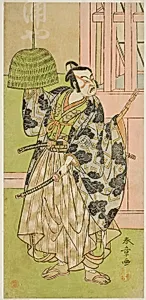
The Actor Ichimura Uzaemon IX as Fuwa Banzaemon in the Play Keisei Nagoya Obi, Performed at the Ichimura Theater in the Eighth Month, 1771
c. 1771
Medium
Color woodblock print; hosoban; from a multisheet composition (?)
Dimensions
29.2 × 13.9 cm (11 1/2 × 5 1/2 in.)
Classification
Department
Arts of Asia
Museum
Art Institute of Chicago
Accession Number
31446
Rights
Public Domain
Art Historical Context
Step into the dazzling world of 18th-century Japanese kabuki theater with Katsukawa Shunsho's *The Actor Ichimura Uza IX as Fuwa Bemon in the Play Keisei Nagoya Obi*. Created around 1771, this color woodblock print captures the star Ichimura Uzaemon IX in his role from a performance at the Ichimura Theater in Edo (modern Tokyo). Rendered in the narrow hosoban format—measuring just 29.2 × 13.9 cm—this intimate print likely formed part of a larger multisheet composition, allowing collectors to assemble panoramic scenes of theatrical grandeur. Shunsho, a leading figure in the ukiyo-e ("pictures of the floating world") tradition, specialized in yakusha-e, or actor portraits that brought kabuki's larger-than-life drama to everyday audiences. During Japan's Edo period, these affordable prints democratized theater culture, preserving fleeting performances amid strict censorship and the booming woodblock industry. The vibrant colors, achieved through intricate layering of carved woodblocks, highlight the actor's expressive pose and lavish costume, evoking the play's tale of romance and revenge. Housed in the Art Institute of Chicago's Arts of Asia collection, this work exemplifies Shunsho's influence on later masters like Hokusai and Hiroshige, bridging art and popular entertainment in a golden age of Japanese printmaking. A snapshot of urban life, it invites us to imagine the roar of the crowd and the thrill of the stage.