
The Adoration of the Magi
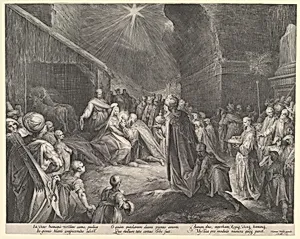
Medium
Engraving; New Holl.'s fourth state of four
Dimensions
Sheet: 13 11/16 × 17 1/16 in. (34.7 × 43.3 cm)
Classification
Prints
Department
Drawings and Prints
Museum
Metropolitan Museum of Art, New York, NY
Credit
Elisha Whittelsey Collection, The Elisha Whittelsey Fund, 1967
Accession Number
67.810.2
Rights
Public Domain
Tags
Art Historical Context
In the late 16th century, engraver Jan Muller, also known as Harmenz. Muller, createdThe Adoration of the* in 1598, the timeless biblical scene of the three wise men presenting gifts to the infant Christ. This engraving reflects the Mannerist influences prevalent in Northern European art during the Dutch Golden Age's early stirrings, where intricate details and elegant figures conveyed spiritual devotion amid the era's religious tensions from the Reformation. As a fine example of printmaking, the work is from New Hollstein's fourth state of four, indicating a later impression with refined details achieved through the engraver's burin on a copper plate. Measuring 13 11/16 × 17 1/16 inches, engravings like this were revolutionary for their reproducibility, allowing widespread dissemination of religious iconography to both elite collectors and everyday devotees across Europe. Housed in the Metropolitan Museum of Art's Drawings and Prints department, thanks to the Elisha Whittelsey Collection, this piece highlights the technical mastery of Renaissance printmakers and the enduring cultural role of the Magi story in Christian tradition, symbolizing faith, journey, and kingship.
About the Artist
Jan Muller|Harmen Jansz. Muller · 1571–1628
**Jan Harmensz. Muller (1571–1628)** Born in Amsterdam in 1571, Jan Harmensz. Muller grew up immersed in the world of printmaking, as the son of the prominent engraver, publisher, and book printer Harmen Jansz. Muller. He studied under his father, mastering the engraving trade within the family business, The Gilded Compasses. Around 1589, Muller joined the workshop of Hendrick Goltzius in Haarlem...