
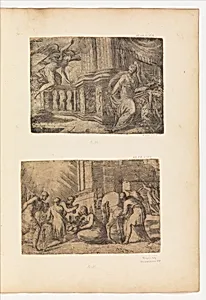
The Annunciation
after ca. 1552 (?)
Medium
Etching
Classification
Prints
Department
Drawings and Prints
Museum
Metropolitan Museum of Art, New York, NY
Credit
Harris Brisbane Dick Fund, 1927
Accession Number
27.78.2(50)
Rights
Public Domain
Tags
Art Historical Context
Andrea Schiavone, also known as Andrea Meldola, created this etching of the Annunciation after about 1552. The scene captures the pivotal biblical moment when the angel Gabriel announces to the Virgin Mary that she will bear the Christ child, a subject long celebrated in Christian art for its themes of divine grace and human humility. As a print, the work belongs to the Metropolitan Museum’s Drawings and Prints department and entered the collection in 1927 through the Harris Brisbane Dick Fund. Etching allowed Schiavone to achieve delicate lines and atmospheric effects that suited the spiritual intimacy of the subject. Working in sixteenth-century Venice, he helped popularize the medium as a means of sharing compositions widely, extending the reach of Renaissance imagery beyond painted altarpieces. The resulting print balances elegant figures with expressive gestures, inviting viewers to reflect on both the sacred narrative and the artist’s refined technique. Today the etching remains a compelling example of how printmaking bridged devotional art and broader audiences during the later Renaissance. Its presence in the Met’s holdings underscores the enduring appeal of this timeless story rendered through a technically innovative process.
About the Artist
Andrea Schiavone (Andrea Meldola) · 1510–1563
Andrea Schiavone, born Andrea Meldolla around 1510 or 1515 in Zara (modern Zadar, Croatia), in Venetian-ruled Dalmatia, hailed from a family rooted in Meldola near Forlì in Romagna, Emilia-Romagna. His father, Simon Meldolla, served as a garrison commander there, and both parents originated from Meldola, where the family held property into the early 16th century. Nicknamed "Schiavone"—"the Slav"—a...