
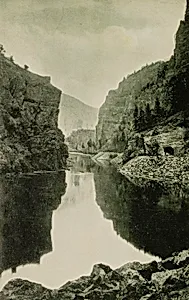
The Cañons of Colorado
Medium
Graphic Arts-Mechanical Reproduction
Classification
Graphic Arts-Mechanical Reproduction
Department
Smithsonian Collection
Museum
Smithsonian American Art Museum
Credit
Smithsonian American Art Museum, Gift of Mr. Ernest Birdseye Bayliss
Accession Number
1995.49.6
Rights
Public Domain
Tags
Art Historical Context
William H. Jackson's *The Cañons of Colorado* the raw majesty of the American West, showcasing dramatic canyons flanked by towering mountains, rugged rocks, and flowing water. As a pioneering photographer, Jackson documented the untamed landscapes of Colorado during the late 19th century, as part of government surveys that mapped the frontier. This mechanical reproduction—likely a photomechanical print—allowed his stunning images to reach wide audiences beyond the expedition trails. Jackson's work with the U.S. Geological Survey under Ferdinand Hayden in the 1870s how Americans viewed their expanding nation. His photographs, including those of Colorado's canyons, fueled public enthusiasm for preserving natural wonders, contributing to the establishment of national parks like Yellowstone. The graphic arts medium here highlights an era when photography transitioned from fragile glass plates to durable prints, making epic scenery accessible in homes and museums. Housed in the Smithsonian American Art Museum through a generous gift from Ernest Birdseye Bayliss, this piece invites visitors to ponder the West's enduring allure—a testament to Jackson's eye for light, texture, and scale that still inspires awe today.