
The Chicago International Exhibition, 1893
1893
Medium
Bronze, struck, silvered
Dimensions
2 × 2 1/16 in. (51 × 52 mm)
Classification
Medals and Plaquettes
Culture
French
Department
European Sculpture and Decorative Arts
Museum
Metropolitan Museum of Art, New York, NY
Credit
Gift of Samuel P. Avery, 1897
Accession Number
97.15.15a, b
Rights
Public Domain
Tags
Art Historical Context
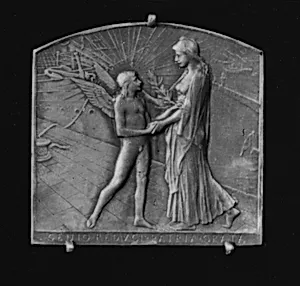
**The Chicago International Exhibition,1893** is a exquisite bronze medal crafted by Louis-Oscar Roty, a leading French engraver renowned for revitalizing the art of medallic sculpture during the late 19th century.uck in 1893 to commemorate the World's Columbian Exposition in Chicago grand celebration of Columbus's voyage and global innovation—this small plaquette (just 2 × 2 1/16 inches) captures the era's enthusiasm for progress and international exchange. Donated to the Metropolitan Museum of Art in 1897 by collector Samuel P. Avery, it now resides in the European Sculpture and Decorative Arts collection. Roty's mastery shines in the medal's struck technique, where a die presses intricate designs into softened bronze, then silvered for a luminous finish that enhances its decorative appeal. This method allowed for remarkable detail in miniature, blending sculpture with numismatics. Likely featuring allegorical women (as suggested by its tags), it reflects the period's frequent use of female figures to symbolize liberty, industry, or the arts—common motifs at world's fairs. As a cultural artifact, this piece highlights France's influence on international expositions and the rising status of medals as collectible art. Roty's work bridged Realism and emerging Art Nouveau, making this token not just a souvenir, but a finely wrought emblem of 1890s optimism. (198 words)
About the Artist
Louis-Oscar Roty · 1846–1911
Louis-Oscar Roty, commonly known as Oscar Roty (1846–1911), was born on June 11 in Paris's Belleville neighborhood, the son of a modest schoolmaster. He began his artistic training under Horace Lecoq de Boisbaudran at the Petite École (later the École des Arts Décoratifs), honing his drawing skills, before entering the École des Beaux-Arts in 1864. There, he studied sculpture and medal engraving u...