
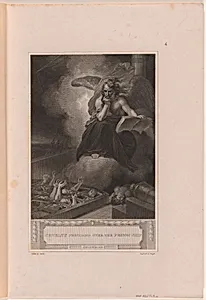
"The Columbiad" -- Cruelty Presiding Over the Prison Ship
Medium
Classification
Department
Smithsonian Collection
Museum
Smithsonian American Art Museum
Credit
National Portrait Gallery, Smithsonian Institution; gift of Mr. and Mrs. Joel Barlow
Accession Number
AD/NPG.79.19.g
Rights
Public Domain
Tags
Art Historical Context
Step into the dramatic world of James Neagle's 1807 print, *"The Columbiad" -- Cruelty Presiding Over the Prison Ship"*, a powerful allegorical engraving from the Smithsonian American Art Museum. Created by the American engraver James Neagle (c. 1760–1822), this work vividly captures a nightmarish scene of torment aboard a British prison ship during the American Revolution. Personified Cruelty, often depicted with wings symbolizing malevolent flight, looms over chained prisoners amid cannons, ships, and ominous chains—elements that evoke the brutal reality of overcrowded hulks in New York Harbor, where thousands of American captives perished from disease and starvation between 1776 and 1783. As a print, Neagle's piece exemplifies early 19th-century reproductive techniques, allowing widespread dissemination of patriotic imagery. Likely an illustration tied to Joel Barlow's epic poem *The Columbiad*—hinted by the work's title and its gift from Mr. and Mrs. Joel Barlow—this engraving served as visual propaganda, stirring national memory and anti-British sentiment just decades after independence. Its stark lines and symbolic intensity highlight the era's growing tradition of history painting in print form, making revolutionary horrors accessible to everyday Americans. Today, this Smithsonian treasure reminds us how art fueled collective identity, transforming personal suffering into a rallying cry for liberty. A poignant blend of allegory and fact, it invites reflection on the Revolution's human cost.