
The Conversion of Saint Paul
ca. 1391–92
Medium
Tempera on wood, gold ground
Dimensions
11 7/8 x 11 5/8 in. (30.2 x 29.5 cm)
Classification
Paintings
Department
Robert Lehman Collection
Museum
Metropolitan Museum of Art, New York, NY
Credit
Robert Lehman Collection, 1975
Accession Number
1975.1.11
Rights
Public Domain
Tags
Art Historical Context
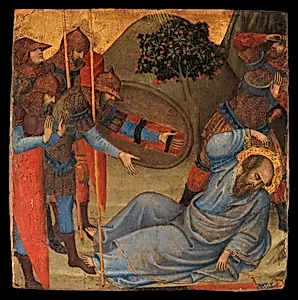
Spinello Aretino, a prominent Tuscan painter active in the late 14th century, captures the dramatic biblical moment of Saint Paul's conversion in this small tempera panel from around 1391–92. The scene depicts Saul—soon to become Paul—struck down by a divine light on the road to Damascus, as recounted in the Acts of the Apostles. Surrounded by startled soldiers, the fallen saint embodies a pivotal transformation from persecutor of Christians to devoted apostle, a popular subject in medieval religious art meant to inspire faith and reflection. Painted in tempera on wood with a shimmering gold ground, the work exemplifies late Gothic techniques of the Trecento period. The gold leaf creates a heavenly glow, drawing viewers into the sacred narrative, while delicate brushwork highlights expressive figures and dynamic poses influenced by Giotto's legacy. At just under 12 inches square, it likely served as a predella panel in an altarpiece, intimate yet powerful for private devotion. Housed in the Metropolitan Museum of Art's Robert Lehman Collection since 1975, this gem showcases Spinello's skill in narrative storytelling and luminous color, bridging Sienese elegance with Florentine naturalism. It invites us to ponder themes of divine intervention and personal redemption that resonated deeply in Renaissance-era Italy.