
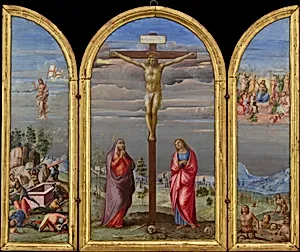
The Crucifixion
Medium
Tempera and gold on wood
Dimensions
Central panel 19 x 11 1/2 in. (48.3 x 29.2 cm); each wing 19 x 6 in. (48.3 x 15.2 cm)
Classification
Paintings
Department
European Paintings
Museum
Metropolitan Museum of Art, New York, NY
Credit
Gift of Nancy, Carolina, and Isabelle Richardson, and Purchase, Friends of European Paintings Gifts, 2006
Accession Number
2006.409
Rights
Public Domain
Tags
Art Historical Context
Francesco Granacci's *Theifixion* (ca. 1510) is a luminous triptych in tempera and gold on, now housed in the Metropolitan Museum of Art's European Paintings department. The central panel (19 x 11½ inches) vividly captures Christ's Crucifixion, surrounded by sorrowful figures including the Virgin Mary, soldiers and men, while the narrower wings (each 19 x 6 inches) likely extend the narrative, evoking themes of Resurrection. This intimate format suggests it served as a private devotional object or small altarpiece for personal prayer. A Florentine Renaissance master (1469–1543), Granacci trained under Domenico Ghirlandaio and collaborated with his friend Michelangelo on the Sistine Chapel vaults. Painted amid Florence's High Renaissance fervor, the work blends late medieval traditions with emerging naturalism. Tempera, mixed with egg yolk for its brilliant clarity, allowed precise detailing of emotional expressions and drapery, while gold leaf imbued the scene with heavenly radiance, symbolizing divine light piercing human suffering. This piece highlights the era's focus on sacred storytelling, bridging Gothic opulence and Renaissance humanism. Donated in 2006, it invites visitors to ponder faith's enduring power through Granacci's masterful blend of piety and artistry.